Why do promising sales opportunities fizzle out before you have a chance to really get into the detail with the customer, to find out what makes them tick and agree the pain points which are solved by your product or service?
Because we FLOP. This short series of articles discusses four traps into which salespeople and commercial teams often fall, especially when under pressure to deliver quickly or when they are unsure of either their own product or how their product can meet the specific needs of the customer. This third and final article delves into the topic of presumption and how it can be a dangerous approach when engaging with customers.
The map is not the territory
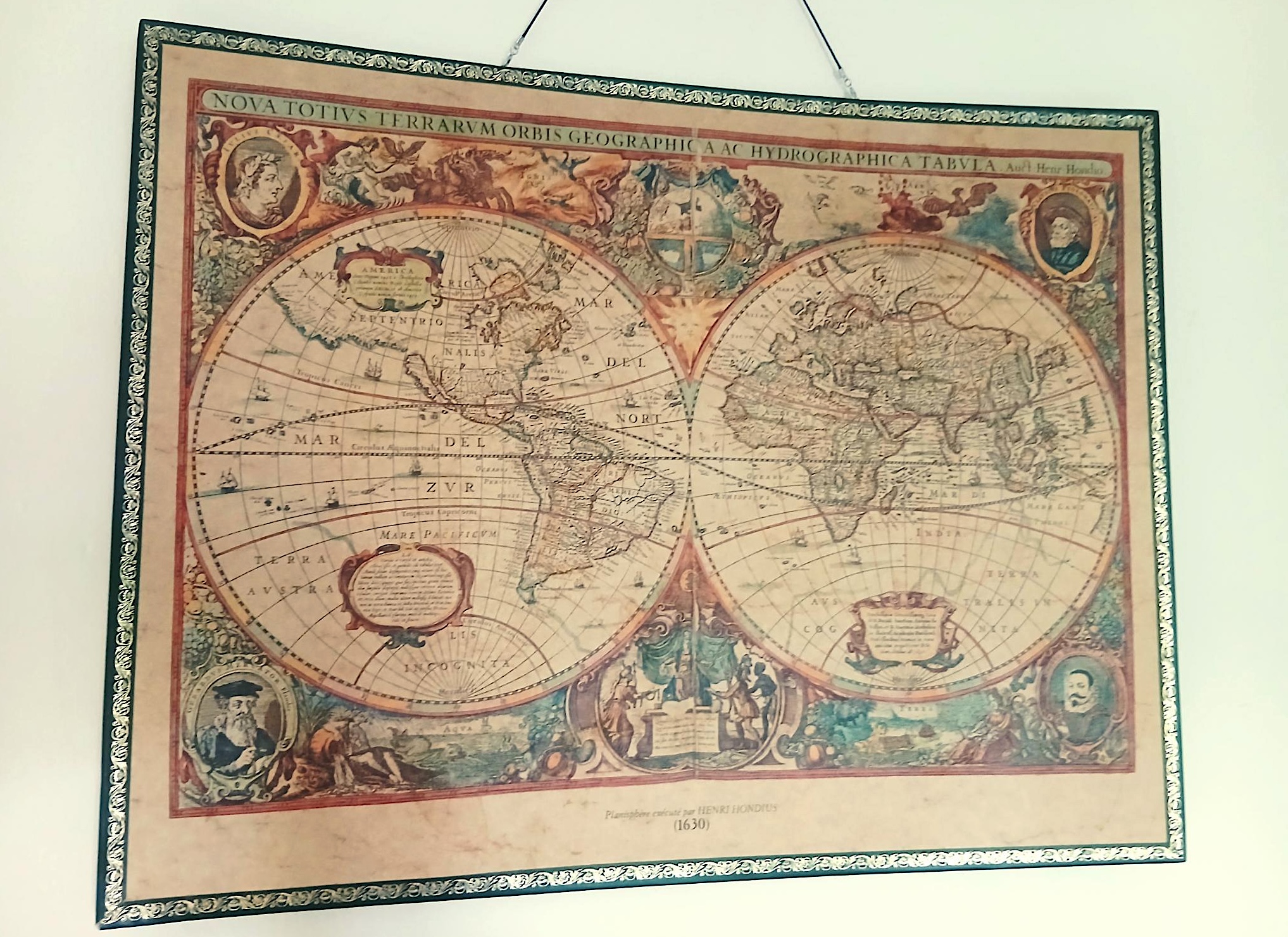
The featured image is a map of the world drawn by cartographer Hendrik Hondius in 1630. I bought this reproduction at a local brocante in France a while ago, and to be honest I didn’t really know what it was! Hondius’ map was the most extensive of its type at the time. Obviously, the map does contain errors, particularly in the American northwest and Asiatic northeast. But, whilst the northern coastline of Australia had recently been ‘discovered’ by the Dutch in the early 1600s, Hondius was sensible enough to describe the unexplored regions in the far southern hemisphere as Terra Australis Incognita. He didn’t presume to guess at how Australia (and the as yet unknown Antarctica) might look in their totality. The map was not the (entire) territory and Hondius made this clear.
P is for Presumption
Fast forward to 2026, where we all want to be customer-focused in how we position our products and engage with prospects. Whilst much of this focus should come from the initial exploration and discovery work we do with our customers, there is also a need to be customer-centric in our general messaging and marketing collateral which helps pave the way for these conversations.
Which is fine. Unless this desire to be customer-focused tips over into being presumptuous about what a customer needs or wants. The two riskiest areas I have seen are in demonstrating ROI (return on investment) and in crafting product demonstrations.
ROI
Showing ROI is a terrific sales and marketing tactic. If you can show the customer how they would see a clear return on their investment, you are helping them to make a strong internal business case to commit their budget and resources to your company and your product. However, before you have engaged closely with a customer, you have virtually no way of knowing the specific numbers they will use to determine the ROI on your product within their business. You are guessing.
So, you can either provide case studies showing the ROI for existing customers (attributed cases are the most powerful, anonymous case studies are less impactful but still useful); or you can try to make some assumptions about the ROI for a particular customer and present this model to them. This second option is really, really risky.
Without naming names, I once sat in a customer meeting with a long-established manufacturing business in the Midlands region of the UK, in which my senior colleague presumed to tell the head of manufacturing what their ROI would be if they decided to use our product. In between bites of his sandwich, the no-nonsense head of manufacturing spluttered an expletive-laden reply, asking my colleague how on earth he thought he could presume to tell him his business. The meeting ended very shortly afterwards, and we didn’t win the deal.
The lessons here are (a) don’t lecture your customer and (b) don’t believe you are the smartest person in the room. Sometimes we get so close to our product and our messaging, so convinced of its superiority and value, that we almost start to think people who don’t share that view are either being wilfully obstructive or just plain stupid. They are neither. The overalls and blunt demeanour of that head of manufacturing belied someone who knew their business inside out, and who wasn’t going to be patronised by a vendor.
Product demonstrations
Product demos are the bedrock of software sales. Customers want to see how your product looks and feels, so they can envisage how they might use it in their own workflows. A generic demo is OK for giving people an initial glimpse of your product, but the optimal approach is to provide your customer with a demo tailored to their needs and processes.
Herein lies the risk of presuming to know what your customer wants – or needs – to see. There is another associated risk here as well: the scripted demo.
I understand why demos are scripted. It’s a way of ensuring consistency and control of the way in which a product is presented. It’s a way of helping new starters to get a fundamental understanding of the product and be able to give a competent, albeit basic demo to a customer.
But this is akin to trying to show someone your product – and for newbies to learn a product – in the same way you punch a route into a sat-nav. Turn left here, take the second right in 500 metres, etc. Which is fine, until the customer insists on seeing what happens if you turn right instead of left. If you choose a different workflow path, for instance. At which point, if you don’t know the product with a sufficient degree of detail and confidence, you are lost. I’ve seen even the most experienced senior sales leaders get completely lost when confronted with this and lose the sales opportunity as a result.
Extending the navigation analogy, my advice is – at the very least – understand your product and how to demo it as a map, and not just a single, fixed, repeated route. Know where you will end up if you turn right instead of left, and how to get back to the preferred route afterwards!
Better still, develop an understanding as to why your customer is asking to be shown a particular workflow or aspect of your product. ‘Why?’ is the most valuable question you can ask in a sales conversation, and this also applies to a product demo. It may be that the customer has a particular pain point which this request helps to surface. Maybe they are trying to replicate an existing workflow which exists only because of deficiencies in their existing platform or processes, which you can address by exploring it in more detail.
The real trick with demos, and with sales conversations in general, is for the customer to believe they are driving the agenda and controlling the discussion – when, in fact, you are skilfully taking them along your preferred route, albeit with the odd, interesting detour along the way from which everyone may benefit.
Do your preparation and planning, be ready to show your customer what they are likely to want to see, but please don’t second-guess them. They know their own territory far better than you do.
Summary
So that was the FLOP. Feature dumping, lack of confidence in your product or market knowledge, oversharing and presumption. The four things that salespeople of all experience levels – and often their commercial teams – do with the best of intentions, but which can make the sales process much harder than it needs to be. I hope you have enjoyed reading these three articles and they have provided at least one or two useful insights!